Here is an unofficial version of Gark the Calm cult for Mythras. There are now also new or revivified versions of its servants in MeG.
““Why suffer, when peace awaits? Why toil in agony when there is labor without pain, service without burden? Gark the Calm offers you eternal rest—where the body finds purpose and the soul finds serenity. Join us, and see that death is not an end, but a tool of harmony. Gark’s path is calm. Gark’s peace is eternal.”
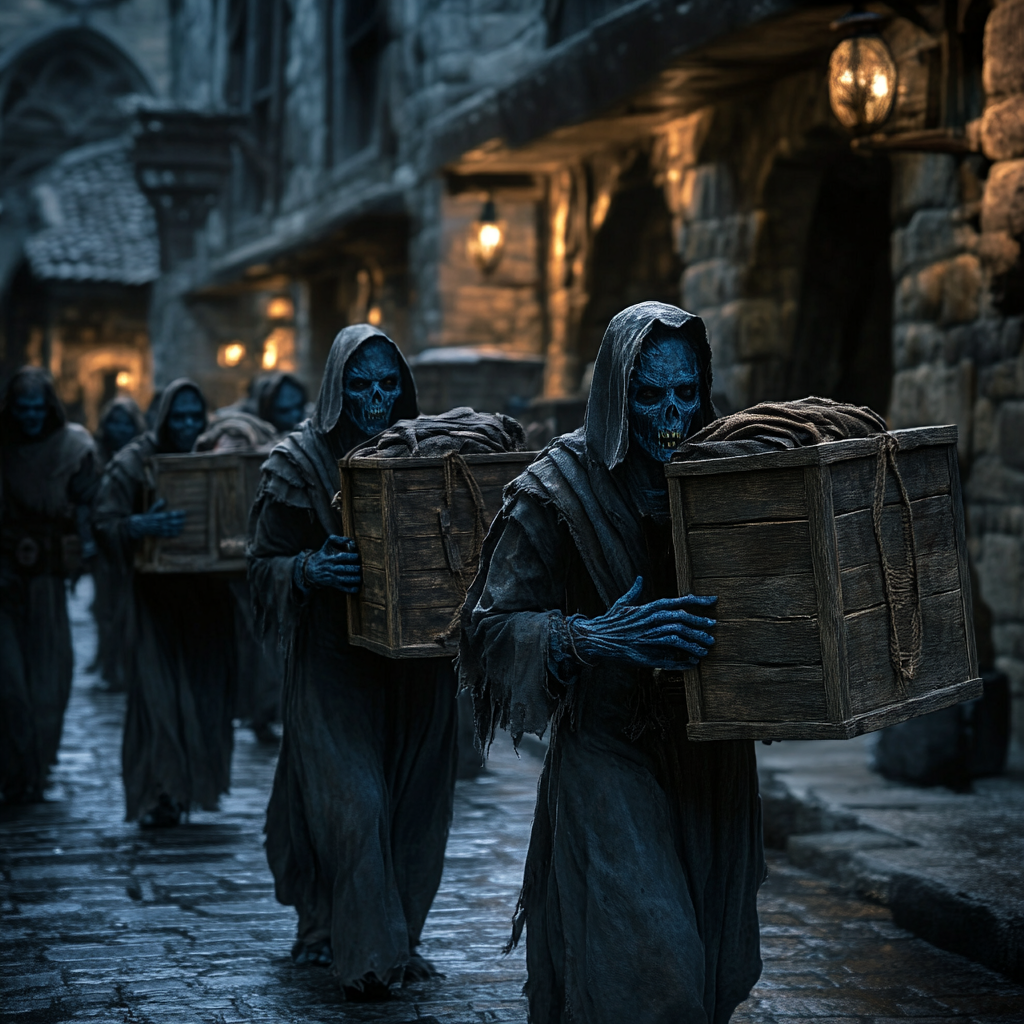
- Human Lay member of Gark the Calm
- Human, Initiate member of Gark the Calm
- Human, Acolyte of Gark the Calm
- Human, Devotee of Gark the Calm
- Zombie, Human Lay member of Gark the Calm
- Zombie, Initiate of Gark the Calm
- Zombie, Acolyte of Gark the Calm
- Gark the Calm Working Party
Pantheon: Chaos Pantheon, Fonritian Pantheon
God of Eternal Peace, Eternal Life, and Zombies
Pantheon:: Chaos Pantheon,Fonritian Pantheon Chaos God of Eternal Peace, Eternal Life, and Zombies
Gark’s priests travel the world in many guises, promising the seemingly impossible to the impoverished people of all civilizations: peace and solace from the miserable world. Gark’s worshipers call him by many names, but every crowd of hopeful pilgrims disappears into ancient ruins or forbidden places. No one knows the fate of these souls, though a terrible odor rises from the zombie populations of those places.
Gark is depicted in whatever form is most pleasant to potential worshipers.
Source: Prosopedia
An extreme offshoot of Fonritian religion comes from the philosophical belief that the physical body must be maintained at all costs. The members of the popular cult of Gark the Calm donate their corpses to the temple of the god. For a period of time, anyone can visit the corpses as they do labor for the temple. After that period expires, the corpse is packed away, supposedly to holy temples high in the mountains. The cult gives out amulets that will let the corpse’s descendants know if their ancestor has slipped away, despite the tender ministrations of that silent god.
Source: Guide to Glorantha
The Cult of Gark the Calm thrives in the shadowy corners of Hombori Tondo, exploiting the city’s disparities of wealth and power to recruit desperate followers. In a city teeming with intrigue and unrest, the cult offers a seductive promise: eternal peace, freedom from life’s burdens, and the utility of uncomplaining, undead servitude. Gark’s followers—known as Garkists—are practical necromancers who use corpses as tools of labor and societal function, particularly as tireless workers for the city’s ambitious building projects, trade enterprises, and even menial labor.
The cult has a hidden, sacred place known only as “The Island”, an eerie shrine reached by raft across an underground lake or one of the remote swampy waterways around delta near Hombori Tondo . Rafts, rowed silently by zombie servants, carry pilgrims and the corpses of the newly dead to the Island, where the dead are consecrated into the service of Gark. The Island serves as a central hub of the cult’s operations and a place of pilgrimage for its faithful.
Though the cult claims to promote harmony through the elimination of suffering, their practices are deeply unsettling to most. The streets of Hombori Tondo whisper of pilgrims disappearing into hidden crypts or ancient ruins, only for their bodies to reappear as tireless, unfeeling laborers. The cult’s power lies in secrecy and a chilling pragmatism that belies their outwardly peaceful doctrine.
Runes
- Harmony: The cult seeks to bring “peace” by turning death into utility, masking chaos with order.
- Magic: Gark grants mastery over the mystical processes of necromancy and zombification, his followers wielding potent spells to bend the dead to their will.
Mythos and History
The myths of Gark trace back to the God Time, where he is said to have emerged from the Black River of Stillness, a cursed waterway that lies hidden in the depths of the world. According to legend, Gark brought peace to a land torn apart by war and famine, not through battle or negotiation, but through the gift of Eternal Rest. He visited a great city suffering from plague and starvation, where rulers struggled to maintain order among the living. As death swept through the streets, Gark appeared, calm and serene, offering to “ease the burden” of their dead.
He raised the fallen with a wave of his hand—not as vengeful, mindless creatures but as silent, tireless workers who could toil endlessly for the benefit of the living. The city flourished under Gark’s guidance, its fields tended by the dead, its walls repaired by uncomplaining hands. Gark taught the living that peace could be found by accepting death’s utility, unburdening both the soul and the society from the weight of suffering.
But the myth takes a darker turn: as the city’s prosperity grew, so did its reliance on the dead. Soon, they began offering their own sick and weak to Gark in return for his blessings. The living were outnumbered by the dead, and the city fell into eerie silence. When outsiders came, they found no living souls—only a city of perfect order, populated entirely by zombies who continued their work in grim, lifeless perpetuity.
In the myths, Gark is depicted as neither good nor evil. He is the embodiment of peace and purpose through the relinquishment of life. His followers interpret this as an eternal gift, though others see it as a chilling curse.
Nature of the Cult
The cult justifies its use of the dead through a twisted form of utilitarian logic:
- The Body as a Tool: The body is a lifeless shell once the soul departs, and its purpose can be repurposed to benefit the living.
- Harmony through Labor: Garkists see zombies as perfect slaves, uncomplaining and tireless, useful for tasks deemed beneath the living. This aligns with Fonritian traditions of slavery, though the undead serve even more efficiently.
- Avoidance of Waste: Corpses are seen as a wasted resource unless utilized. The cult often resorts to grave-robbing or quietly collecting the bodies of the poor, promising families that their loved ones are being “honored” through service to the city.
Organization
The cult operates in congregations, each led by a Priest of Gark, who oversees the rituals and manages the supply of corpses. In Hombori Tondo, the cult has deep connections with several key institutions:
- Builders and Merchants: Garkists offer cheap zombie labor for construction projects, caravans, and dock work.
- Graveyards and Funeral Rites: They clandestinely acquire bodies through agreements with corrupt officials or outright theft.
- The Island: A hidden shrine accessible only by raft. Zombie rowers ferry pilgrims and corpses to this eerie sanctuary, where the dead are consecrated and new followers undergo initiation rites. The Island is rumored to house ancient relics and forbidden knowledge, protected by both magical wards and undead guardians.
The cult maintains a strict hierarchy:
- Initiates learn basic magic and serve as labor organizers or corpse collectors.
- Acolytes master zombification spells and oversee small-scale projects.
- Priests lead major rituals, manage sacred sites, and ensure the cult’s secrecy.
Membership
- Initiation Requirements: Candidates must donate a corpse (preferably fresh) or their own body upon death. Many members join out of desperation, lured by promises of peace or economic opportunity.
Social Role:
- The cult provides a tireless workforce to the city through its zombie labor, filling roles that others avoid, such as construction, heavy lifting, and menial tasks. This has made the cult indispensable to certain merchants and builders.
- Lay members are drawn in by the cult’s promises of eternal peace, freedom from suffering, and the promotion of social stability, which appeals to the desperate poor.
Folk Magic
Befuddle
Calm
Might
Shove
Slow
Vigour
Voice Used to command the zombies
Rune Magic
Initiate Level
Cancel Light
Chill
Labor’s Accord (Modified City Harmony): A spell that inspires cooperation and suppresses resistance among laborers, including zombies and living workers, for a short period.
Doleful Chime
Draw Human
Reflection
Spirit Block
Synchronize
Acolyte Level
Create Zombie
Sacred Band
Priest Level
Ageing
Turn Blow
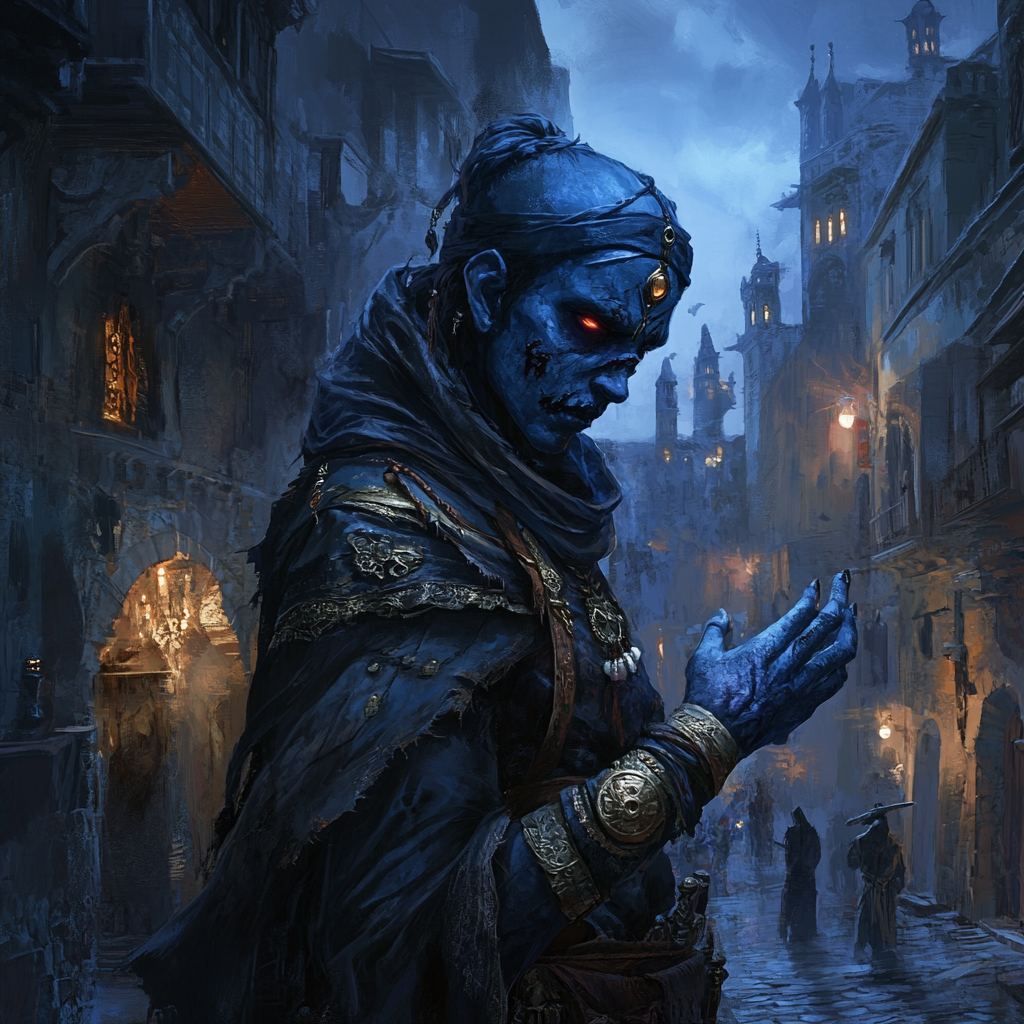
Gifts and Compulsions
- Gifts: Horde
- Compulsions:
- Members develop an obsessive fascination with corpses and the undead.
- Higher-ranking members (Acolytes and Priests) often seek to have their own bodies animated upon death, sometimes taking extreme risks to achieve this sooner.
Cult Skills
Brawn
Craft (Masonry or Construction)
Endurance
Lore (Cult)
Lore (Human)
Perception (to locate fresh corpses or assess structural weaknesses)
Stealth (to acquire bodies and evade authorities)
Allies and Enemies
- Allies:
- Corrupt merchants and builders who benefit from cheap zombie labor [[Into the Heart of Darkness/Factions/Cults and Brotherhoods/Orange Guild|Orange Guild]]
- Desperate poor families who see the cult as a means of survival.
Enemies
- Humakt Cultists: The cult of true death sees Garkists as a blasphemy against the natural order.
- Leopard Secret Police: Their grave-robbing and hidden activities have drawn the attention of Hombori Tondo’s secret enforcers.
- Brotherhood of Behemoth: The Behemoth Guild, which dominates beast-handling and work animals, fiercely opposes the cult. They see zombie labor as a direct threat to their livelihood and traditions, often leading to violent clashes.
The Cult of Gark the Calm has deep roots in the shadowy corners of Hombori Tondo, with its eerie rafts crossing to The Island and its relentless pursuit of death as utility. Its chilling practices place it in direct conflict with those who see life—and death—as sacred, making it both feared and sought after by those desperate enough to embrace its morbid promises.

 Notes From Pavis
I am confused; the soul departs and the zombie is an automaton like the ones from zz or the soul remains but happy and in calm with their lot?.
Anyway, thanks for the writeup. I am happy to see Mythras gloranthan content.
LikeLike